
Reinventing a company
Scaling an unscalable mission-driven business through hidden capabilities
scale
transformation
improvement
for-profit
mature stage
economic mobility
SUMMARY
A social enterprise wanted to scale its service and become a major brand.
After a decade of operating as a lifestyle business, this company's leadership had ambitious plans—dominate their industry as a major brand, but their core service wasn't designed to scale.
Through facilitation, research, and industry analysis, critical barriers to their growth ambitions were uncovered. Rather than trying to force-fit their existing model, we explored a fundamental question—how do you scale an unscalable business?
Through collaborative ideation sessions, the team aligned on the challenges and got invested in reimagining the business model. Multiple rounds of prototype testing helped build confidence in a radically new direction. The answer emerged through this collective process—a completely new business concept that leveraged capabilities the firm didn't even realize they possessed.
APPROACH
We didn’t jump to solutions. Instead, we followed our methodology.
01 | Research
Conducted interviews and analyzed qualitative and quantitative data to understand the full scope of challenges.

02 | Define
Defined the nature and scope of the problem to create a container for ideation.

03 | Ideate
Engaged in collaborative activities to ideate possible solutions to the problem.

04 | Prototype
Converged on select solutions. Designed and tested prototypes with real clients.

05 | Implement
Refined prototypes and implemented at scale.

RESEARCH
Research revealed that companies in this niche were seen as a “necessary evil,” and this one was not in a competitive position.
Market context
It was not uncommon for the market to view companies in this niche as a “necessary evil,” not as valued partners. Although clients engage companies in this niche to do important work on their behalf, many are reluctant customers.
The industry was highly fragmented, with a few established players who dominated the market while thousands of small companies competed for a much smaller share of the market.
Employee experience
Team members lacked clarity and felt like they were pulled in many directions. They had ideas for how to improve the service, but believed there was no room for differing perspectives. A lack of psychological safety became a barrier to them speaking up or raising legitimate issues. Many found both the work and culture unsustainable, and the average employee tenure was less than one year.
The service delivery team felt micromanaged and received constant, but conflicting, feedback on their work.

Client experience
The company’s competitive position was unsustainable— no longer differentiated in this mature and competitive market, yet the service was priced 2-3x higher than competitors.
There was no reliable mechanism for generating business.
Clients valued speed and felt that parts of the process were unnecessary and delayed results.
The service delivery team felt compelled to “make up” for new client dissatisfaction, the tangible and intangible costs of which were often invisible.
There were no clear, documented expectations regarding service delivery.
The service delivery team spent ~20%+ of their time on activities that yielded no value to the client.
The service delivery team often skipped steps and quality assurance due to time pressures, which led to complaints by clients about the errors and results.
The vast majority of projects ended with successful outcomes, yet paying clients were dissatisfied, while other stakeholders were overwhelmingly satisfied.
Even happy clients rarely re-engaged because they have that particular need infrequently, but the happiest clients will refer clients to the company.
DEFINE
Scaling an unscalable business was a secondary concern. There were more important problems to tackle first.
The full scope of the problems identified during the research phase indicated that the core service, as it was designed and delivered at this time, was not sustainable. It became apparent that the foundation of the business was not stable enough to attempt growth or scaling. So, we pursued two problems.
THE OVERARCHING PROBLEMS
01
How might we stabilize the existing business?
02
How might we leverage existing capabilities to develop a scalable business concept that advances the company’s mission?
IDEATE
The same team that felt stuck at the beginning generated over 100 ideas.
Through a series of collaborative activities involving various stakeholders, we generated ideas to solve the organization’s problem.

102 ideas generated

3 selected for prototyping
IMPLEMENT
First, we focused on stabilizing the legacy business.
Direction
Established the company's first identity framework—vision, mission, and values. As a social enterprise, this crucial component of strategy and decision-making was missing.

Standardization
Standardized the core service while allowing for adaptations based on client personas we developed using research and team expertise. We defined quality standards.

Sales systems
Created systems, materials, and a new pricing strategy to enable the sales function. We developed a plan to revisit how to differentiate the firm in the market.
AI integration
Redesigned part of the service delivery workflow to incorporate a large language model, reducing and evening out the team's workload while meeting quality standards.

PROTOTYPE | TEST
Then, we designed and tested 3 prototypes for the scaling problem.
Insights
prototype
not implemented
Likely not enough interest to build a sizeable business. Did not stand out in the market, which perpetuated the lack of differentiation. However, this small-scale test protected the company’s resources by preventing the company from committing to this as a strategy and investing vital resources.

Coaching
prototype
not implemented
Likely not enough interest to build a sizeable business. Lacked appeal with the client base—while they didn't always like hiring a company, they also didn't want to do that type of work themselves. However, this small-scale test protected the company’s resources by preventing the company from committing to this as a strategy and investing vital resources.

Pivot
prototype
implemented
Not every business leans into its strengths, but if you ask what the company is good at, the answer might surprise you and send you in a direction you never would have imagined at the start of the project. The prototyping process revealed capabilities the firm didn't even realize it had. By testing assumptions with real clients, we discovered what they actually valued—and it wasn't what the firm had been selling.

OUTCOMES
We didn't just stabilize a business in crisis. We reimagined its future.
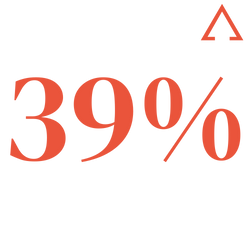
The company’s revenue grew 39% YoY.

We developed a new business concept that leveraged existing capabilities, which showed early promise in the market and positioned the company to scale.
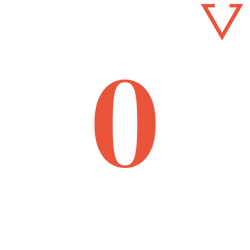
There was no regrettable attrition during the transformation, despite high employee attrition in the years leading up to this work.
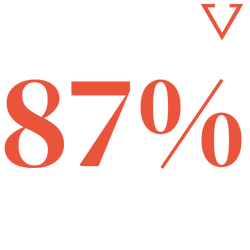
Reduced per-project costs by 87% while maintaining work quality, accelerating the project timeline for clients, reducing employee stress, and evening out employee workloads.
CASE STUDY
Scaling a company 10x
Two ways to start
Subscribe | Free insights on the fundamentals of integrated organization design
See if it is right for you | Free 1-hour strategy session for executive leaders
Have a question for our team?