
Scaling a company 10x
Scaling a social enterprise with operational excellence & creativity
scale
transformation
improvement
for-profit
early stage
human development
SUMMARY
A social enterprise wanted to solve its capacity problem so it could stop turning away potential clients.
A self-funded company was caught in a growth trap. After two years of uneven demand, they were turning away clients and revenue because they lacked team capacity to execute the work. The CEO wanted to hire additional staff, but couldn't afford it.
A deep dive into their operations revealed a more fundamental problem—the way they managed existing team capacity and designed their service was causing them to lose money on every single client engagement—threatening the company's survival.
Through facilitation and collaborative ideation, the team confronted this reality and got invested in a complete service redesign. Rather than just solving the capacity problem, we transformed both their profitability model and client experience, enabling the company to 10x revenue.
APPROACH
We didn’t jump to solutions. We followed our methodology.
01 | Separate signal from noise
Conducted stakeholder interviews and analyzed qualitative and quantitative data.

02 | Define the overarching challenge
Defined the nature and scope of the problem to create a container for ideation.

03 | Co-create possible solutions
Engaged in collaborative activities to ideate possible solutions to the challenge and converged on a few solutions to advance to the prototyping phase.

04 | De-risk by testing prototypes
Designed and tested prototypes with real clients.

05 | Scale what works
Refined prototypes and implemented at scale.
RESEARCH
Key insights from research indicated that the company had a profitability issue, and the client experience was inconsistent.
Market context
There seemed to be a mismatch between what companies specializing in this niche wanted to provide and what clients wanted to buy. Companies were often most interested in working with clients on the strategic aspects of change management. However, clients who engaged these companies saw their value add as learning and development, largely uninterested in paying them for the more strategic work. The clients wanted workshops, but their willingness to pay was low, leaving little room for profitability in the market.
The company’s value proposition revolved around the strategic services, while nearly all of its revenue was generated by the learning and development service.
This niche market was growing, but so was the number of competitors in the space.
Employee experience
There was no formal onboarding for new employees; however, the company needed them to add value quickly.
Team members often lacked key information about conversations with the client during the sales phase, which left the service delivery team unclear about the scope of each project and unprepared to handle certain client situations.
The company needed the senior team to take learnings from client engagements and innovate, but senior team members were so bogged down with routine work.
The company often received inquiries from people interested in joining the team or learning how to facilitate workshops, even when there were no open positions at the company.

Client experience
The value proposition was unclear to potential clients and the team. New clients were often generated from existing relationships and speaking engagements at conferences, creating growth limitations.
As a startup, demand for services was unpredictable. When demand exceeded capacity, the company turned away potential clients, losing revenue. On the flip side, there are times when capacity exceeded demand.
Clients were not onboarded, and the experience varied from one client to the next. Some clients were surprised to start the work with a consultant they had not yet met, as it differs from the industry norm.
Every new client engagement started with a blank slate, but team members often cobbled together materials from other client engagements.
There was no branding, and deliverables were inconsistent, even for the same project.
The cost of producing custom workshops was unsustainable—the firm was losing money on each workshop.
The firm sometimes brought in subcontractors, but they were not always effective as consultants, were unfamiliar with the material, and/or were not adequately prepared.
Participant satisfaction was high, but client satisfaction was not consistent.
Clients and participants often requested digital copies of materials, but the firm would not provide them due to intellectual property concerns and low willingness to pay.
Some workshop participants would inquire about learning how to facilitate the company’s workshops.
Consultants held the relationship with the clients, but they did not sell, so there was usually little to no exploration of additional opportunities to provide services.
DEFINE
It was clear that the problem was not simply a capacity issue.
We needed to choose a starting point that set the company in the right direction. Its survival depended on it.
As a self-funded business with low margins, the company had few resources to invest in solving this problem. The CEO’s instincts told them to hire more people to add additional capacity to the business, which makes logical sense. However, the company was not in a financial position to hire, and the demand for the company’s services was uneven, leaving the existing team underutilized at times.
The cost of producing and delivering a custom workshop exceeded revenue, and adding more people to the team would only exacerbate the issue. A single workshop was typically staffed with 2-3 full-time employees and subcontractors, and the project team usually spent a minimum of 60 hours planning, producing, and delivering a custom workshop, which meant the company was generating a maximum of $83 of revenue per hour of work. And even with so many hours allocated to a single workshop, client satisfaction was not consistent from one engagement to the next.
How might we ensure a profitable and consistent end-to-end client experience that results in every client and workshop participant giving the firm a satisfaction rating of 9+, on a scale of 1-10, regardless of how the project is staffed?
THE OVERARCHING PROBLEM
IDEATE
While the problem we decided to solve was rooted in the client experience, it had implications for every aspect of the business.
This required multiple rounds of ideation and convergence.

The team participated in 3 workshops and several retrospectives.

We selected 3 focus areas for improvement.
PROTOTYPE | TEST | IMPLEMENT
We created three prototypes, all of which became part of the normal operations of the company.
Standardization
prototype
multiple iterations
implemented
The firm promised clients custom workshops, which appealed to them, so we prototyped an approach that standardized the service while allowing flexibility and guidance for customization. Before the prototype, the firm’s workshops were roughly 80% custom and 20% standard. After the prototype, it flipped to approximately 80% standard and 20% custom. Customization was also streamlined to reduce production time. Branded templates were also created.
After a few iterations, this became a permanent fixture in the organization. Participant satisfaction remained high, and client satisfaction improved.

Systems
prototype
multiple iterations
implemented
To improve the client experience, we improved the employee experience. This involved creating systems for onboarding new team members, decision-making, project management, and many others. Before the prototype, employees were frustrated by the barriers that made it more challenging for them to deliver excellent work to the client. After the prototyping new systems, employees reported having the knowledge and information necessary to deliver an excellent client experience, and employee satisfaction improved.
After a few iterations, new systems were permanently embedded at the firm.

Apprenticeship
prototype
two iterations
implemented
To address the need for additional capacity occasionally without increasing downtime of full-time employees, training for new employees, and developing a high-ticket service with better margins, leveraging learning from service delivery, we prototyped an apprenticeship program that trained people to deliver the company’s most frequently requested workshops, creating a contingent workforce sustainable for a bootstrapped company, a talent pipeline for future full-time roles, and a service that could be repackaged and sold to clients.
The first iteration was a success, while additional iterations further refined the concept.

OUTCOMES
By redesigning the service, the firm didn’t just add incremental capacity, it was able to scale.
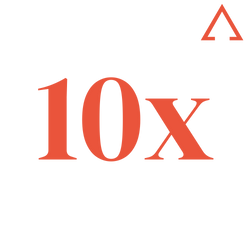
The company scaled revenue 10x while only increasing headcount 2x .
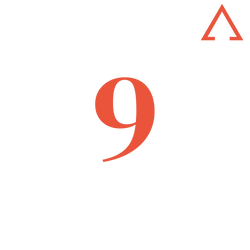
Clients and participants consistently reported satisfaction of 9/10.
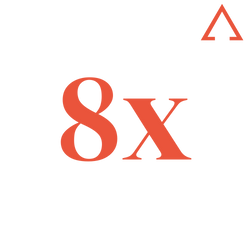
We increased the number of trained facilitators by 8x and expanded geographic reach without increasing overhead.
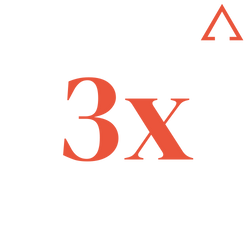
The number of projects every full-time consultant could lead increased by 3x.
CASE STUDY
Reinventing a company through hidden capabilities
Two ways to start
Subscribe | Free insights on the fundamentals of integrated organization design
See if it is right for you | Free 1-hour strategy session for executive leaders
Have a question for our team?